In short
Road planings give a harder, smoother, near dust-free running surface because the old bitumen in them binds under the roller and the sun; crushed stone drains better, can be regraded for years and copes with livestock. For vehicle tracks, yards and hardstanding, planings are usually the better value. For cow tracks, boggy ground or anywhere that needs to drain through, stone wins.
This is a job for our Road Planings service.
What road planings are
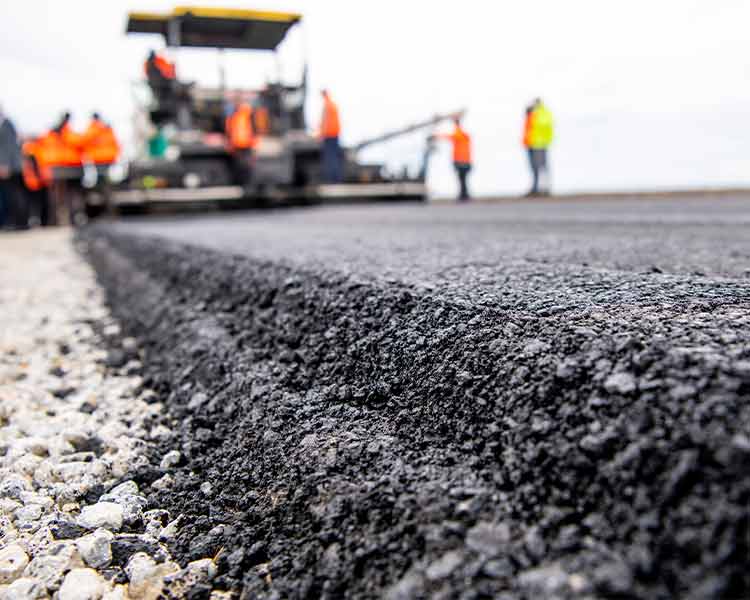
Planings are the old asphalt milled off a road before it is resurfaced. Crushed and graded, they are a mix of stone and aged bitumen. Laid, rolled and left through a warm spell, the bitumen softens and knits the surface together, so a planings track ends up firmer and tighter than loose stone without the cost of hot tarmac. They are also a recycled material, which suits a lot of the estates we work for.
Where planings win
- Vehicle tracks and access roads. Cars, vans and tractors polish planings smooth. Less dust in summer, less loose stone thrown at paintwork.
- Yards and hardstanding. Machinery parked on a bound surface does not sink in or rut the way it does on stone.
- Cost per metre. Planings are usually cheaper than quarried stone delivered, though that depends on what is available near you at the time.
Where crushed stone wins
- Livestock tracks. Farmers Weekly's cow track guide is clear that the surface must be smooth and free of sharp material, finished with fines a cow can walk on comfortably. Planings can be sharp before they bed in and hold heat in summer.
- Wet or peaty ground. A stone track drains through itself. A bound planings surface sheds water instead, so on a flat, wet site it needs a proper camber and side drains or it will hold puddles.
- Tracks that will be regraded. Loose stone can be scarified and reshaped for years. A bound surface is harder to rework.
The waste rules
Planings are legally a waste until they are put to use, so using them on your land is covered by the Environment Agency's U1 exemption. Under U1 you can build a track, path or bridleway using road planings, up to 1,000 tonnes over the three year registration, and the material must be suitable and satisfy engineering standards. Larger road schemes have a separate, higher limit. The exemption has to be registered with the Environment Agency before the material arrives, and we can advise on it, so it is worth knowing before a lorry turns up.
What we usually recommend
| Site | Our usual choice |
|---|---|
| Estate or farm access road, mostly vehicles | Planings, rolled, over an existing stone base |
| Machinery yard or hardstanding | Planings, or tarmac if the budget allows |
| Cow or sheep track | Crushed stone with a fine top |
| New track across a wet field | Membrane, crushed stone base, then either finish |
Often the answer is both: a stone base for strength and drainage, with planings as the running surface. On the tracks we build from Ringwood to Heathfield, that combination is the one that comes back for the least maintenance.